HOA Noise Complaint Between Neighbors: Evidence and Resolution Steps
A practical guide to noise complaint between neighbors: evidence to gather, process checkpoints, response options, escalation triggers, and jurisdiction-safe cautions.
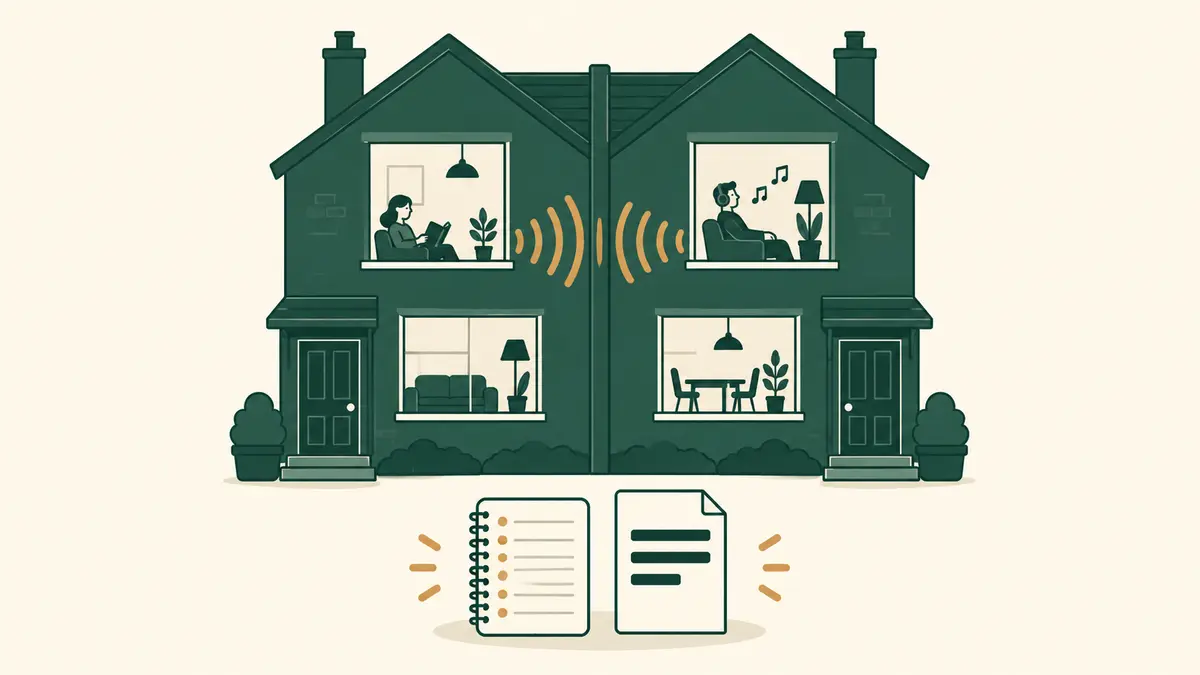
Noise complaints become useful to an HOA only when they move from “my neighbor is too loud” to a repeatable description of conduct. Identify the type of noise, when it occurs, how long it lasts, where it is heard, and which covenant, quiet-hours rule, nuisance standard, or local ordinance may apply. The HOA may be able to enforce a community rule, but it is not a substitute for police or municipal authorities when the issue involves immediate safety or a public-noise violation.
Keep an incident log that shows a pattern
For recurring noise, record date, start and end time, type of sound, location, and what you did in response. Note whether windows were open, whether the noise was inside or outside, and whether it stopped after contact. Avoid exaggeration such as “constant” if the log shows isolated episodes. A credible pattern is more persuasive than a highly emotional description.
Short audio or video clips can help document the character of the noise, but recording laws and privacy rules vary. Do not trespass, point devices into private interiors, or assume a phone decibel app is a legally calibrated measurement.
Read both HOA rules and local ordinances
An HOA rule may prohibit nuisance, unreasonable noise, amplified music, barking, equipment use, or activity during stated quiet hours. A city or county may use different standards. The association should enforce only the authority it actually has. If the complaint concerns conduct outside the HOA’s rule but within a municipal ordinance, the appropriate remedy may be through local authorities instead.
Try direct communication when it is safe
Many noise problems begin with a neighbor who does not realize sound carries through a wall, courtyard, balcony, or shared structure. A short, non-accusatory message can identify the time and specific disturbance and ask for a practical change. Skip direct contact if there is a history of threats, harassment, violence, or another reason it would be unsafe.
Send the HOA a narrow complaint packet
- A short summary of the recurring conduct.
- The incident log covering a meaningful period.
- A few representative recordings or witness statements if lawful and useful.
- The rule or nuisance provision you believe applies.
- Copies of prior written attempts to resolve the issue, if relevant.
- A specific request: investigate, send a notice, enforce quiet hours, or explain whether the conduct falls outside HOA authority.
A massive folder of every frustrating interaction can obscure the actual noise pattern.
How a board should evaluate the complaint
Boards should distinguish objective evidence from conclusions. Confirm that the rule covers the conduct, apply the same evidence standard to comparable complaints, and avoid deciding credibility from personal relationships. If the building has shared mechanical systems, thin walls, common-area equipment, or recurring structural sound transmission, maintenance may be part of the problem rather than owner misconduct alone.
Example: late-night subwoofer through a shared wall
An owner logs bass noise after midnight on eight nights over three weeks. The HOA rule prohibits amplified sound that unreasonably disturbs neighboring units during designated hours. The owner submits the log and three short clips. Management sends a notice identifying the dates and rule. The neighbor responds that a speaker sat directly against the shared wall and moves it, adding isolation pads. The log shows no recurrence. The solution came from a specific pattern and practical cure, not from trying to prove the neighbor was inconsiderate.
Pets, children, and ordinary living noise
Not every audible sound is an enforceable nuisance. Boards should be cautious about converting normal daily living into violations, particularly in attached housing. The wording of the governing standard, frequency, duration, time, intensity, and effect all matter. Complaints that touch disability, familial status, or other fair-housing protections require additional care and neutral treatment.
Preserve messages and incident details and contact appropriate authorities when threats, stalking, damage, or safety concerns arise.
When the issue is harassment or threats
If a noise dispute includes threats, stalking, property damage, repeated intimidation, or safety concerns, treat those facts separately from the sound complaint. Preserve messages and incident details and contact appropriate authorities when necessary. Do not rely on a routine HOA violation process to manage an emergency.
| Observed pattern | Practical terms | |
|---|---|---|
| Focus | Dates, duration, location, and type of sound | Speaker placement, quiet hours, floor covering, or notice |
| Measure success | Whether the recorded pattern recurs | Whether the agreed change reduces disturbance |
| Boundary | HOA rule and evidence that applies | Public authority for conduct outside HOA control |
Mediation can fit recurring neighbor noise
When both owners agree that sound transfer is the problem but disagree on what is reasonable, mediation can produce practical terms: speaker placement, quiet hours, floor coverings, notice before parties, equipment limits, or a communication channel. The agreement should be specific enough that both sides can tell whether it is working.
What the accused owner should request
If you receive a vague noise notice, ask for the dates, conduct, and rule at issue while preserving the response deadline. Provide relevant evidence—work schedule, equipment changes, building-maintenance concerns, or witnesses—without retaliating against the complainant. A request for specificity is stronger than a blanket statement that the neighbor is lying.
Check local noise law alongside the covenants
HOA rules and state statutes vary — check your governing documents and local law. Nuisance standards, local noise ordinances, evidence rules, recording laws, fair-housing obligations, and the association’s duty or discretion to enforce can differ substantially.
Not legal advice. This article is general educational information. For threats, repeated harassment, significant damages, discrimination concerns, or court-related deadlines, seek appropriate local professional help.
Focus the file on pattern, impact, and remedy
A useful noise outcome identifies the behavior to stop or reduce, the times or conditions that matter, the evidence used, and what happens if the pattern recurs. That is more workable for both neighbors and the board than a permanent file of competing claims that one household is “too loud” and the other is “too sensitive.”
Sources and further reading
- CAI — Community Association Governance Guidelines (2022)
- Foundation for Community Association Research — Governance Best Practices
- CAI — Alternative Dispute Resolution
Sources are used for general governance, fair-housing, debt-collection, or dispute-resolution principles. State-specific HOA law may impose additional or different requirements.
Frequently asked questions
What belongs in the working file for noise complaint between neighbors?
For noise complaint between neighbors, prioritize incident log with dates/duration, objective recordings or corroborating witness notes where lawful, written complaint identifying dates and conduct, and governing rule or nuisance provision.
What details should I put in an HOA noise incident log?
Record each date, start and end time, type and location of sound, what you were doing, and whether it stopped after contact. Be specific and avoid labels such as “constant” when the episodes were occasional. Keep a few lawful recordings or witness notes if useful, and check local privacy and recording rules.
Can an HOA make a neighbor stop ordinary household noise?
It depends on the rule’s nuisance or quiet-hours language and the frequency, duration, intensity, and effect of the sound. Ordinary living noise may not be an enforceable violation, especially in attached housing. Ask the HOA to identify the provision and specific conduct, and preserve your response and evidence.
Should I contact the neighbor directly about recurring noise?
A brief, respectful request can solve a sound problem when direct contact is safe. Describe the dates and specific disturbance and ask for a practical change. Skip direct communication if there have been threats, harassment, or safety concerns; use the HOA process or appropriate local authorities and preserve relevant messages.
When should a noise complaint go to local authorities instead of the HOA?
If the issue involves immediate danger, threats, stalking, property damage, or a public-noise ordinance rather than an HOA rule, contact appropriate local authorities as needed. The HOA is not a substitute for emergency response or municipal enforcement. Keep the incident record and separate safety concerns from the association complaint.